
Thailand’s geography makes transport planning essential. While infrastructure is well developed, distances between regions such as Chiang Mai, Phuket, and the Gulf islands mean that combining flights, trains, buses, and ferries is often necessary.
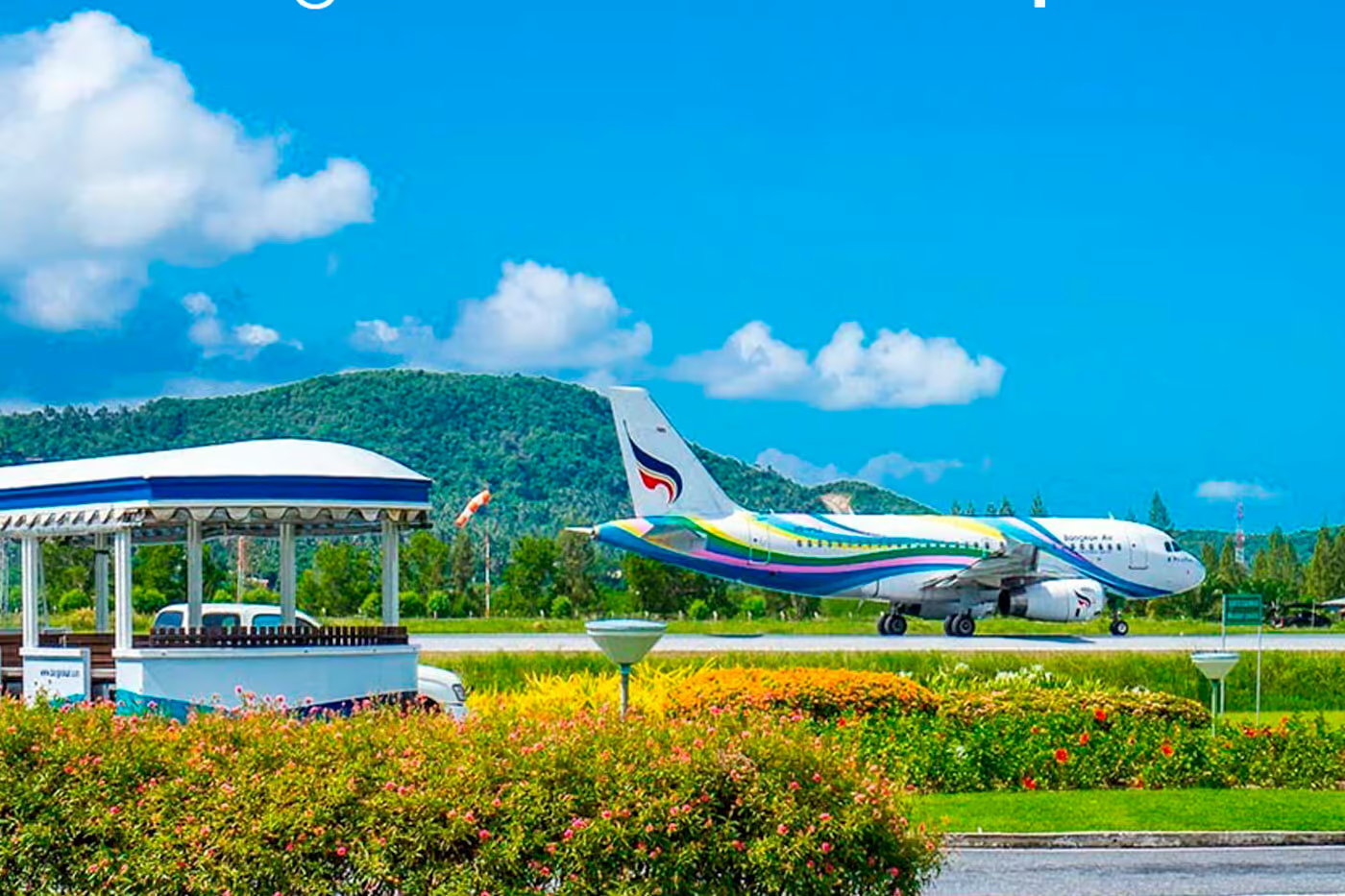
Bangkok acts as the country’s central transport hub, linking northern Thailand, the Andaman coast, and the Gulf islands through a structured network of long-distance routes.
If you’re still deciding where to go in the country, our Thailand travel guide provides a broader overview of regions, highlights, and suggested routes.
Understanding these corridors helps avoid unnecessary backtracking and allows you to structure your itinerary efficiently.
Travel between Bangkok and Chiang Mai connects the capital with northern Thailand’s cultural heart. This is one of the country’s most established long-distance routes.
For full details on schedules and comparisons, see our How to get from Bangkok to Chiang Mai.
Phuket serves as a gateway to the Andaman coast and is a major southern transport hub.
See the complete breakdown in our traveling from Bangkok to Phuket guide.
Krabi connects the mainland to Railay, Ao Nang, and nearby islands.
Full details available in our Bangkok to Krabi route guide.
Reaching Koh Samui often involves combining air and sea transport.
Detailed explanation in our travel to Koh Samui from Bangkok guide.
Koh Phangan depends on ferry connections from the mainland or nearby islands.
See the full route in our Bangkok to Koh Phangan guide.
Yes. Infrastructure is strong, although island routes require coordination between land and sea transport.
Flights save time. Trains offer comfort and scenery, especially overnight sleeper options.
Compared to Western countries, transport is affordable. Flights are competitively priced, and buses are budget-friendly.
Always allow buffer time when ferry connections are involved, especially during high season or monsoon periods.