
In the city of Chengdu, everything is made to remind you of the region’s favorite animal. Whether you get in a taxi, walk into a store, or go for a walk, there are drawings of pandas everywhere. The locals adore them, and there are giant statues of these animals- which are the most beloved in China, at least among those that are alive.

Everything reminds you that the capital of Sichuan is panda city. Or at least where, if you want, you can see pandas in the wild. Sort of. And if you want to know how to do it, you can jump right here. Although we encourage you to read our considerations first.
The giant panda, a Chinese icon, once lived in the bamboo forests of
Shaanxi and Gansu, and especially in Sichuan, the region of which Chengdu is the capital. But for a long time, it was very close to extinction—partly due to human progress transforming rural areas—and the Chinese government had to orchestrate an intensive plan to rescue the species.
And in this plan they put emphasis on a contradictory site on the outskirts of Chengdu: the Chengdu Research Base of Giant Panda Breeding.

The survival of the giant panda bear was threatened not only by changes to our planet, but also by its very biology. They are fertile only rarely in a year, and certain behaviors of the species, such as extreme laziness, mean they have no desire to produce the miracle of life, what scientists call “coupling.”
So when China realized it had to do something to save the panda, it wasn’t enough to develop protected wild areas that would provide the right conditions for its community to thrive; it also had to boost its biology to encourage its reproduction.
Thus was born the enclosure commonly known as the Chengdu Panda Base, a place to replicate the life of these animals and achieve the ideal conditions for their natural reproduction, and also to promote artificial methods so that the species could continue to exist.
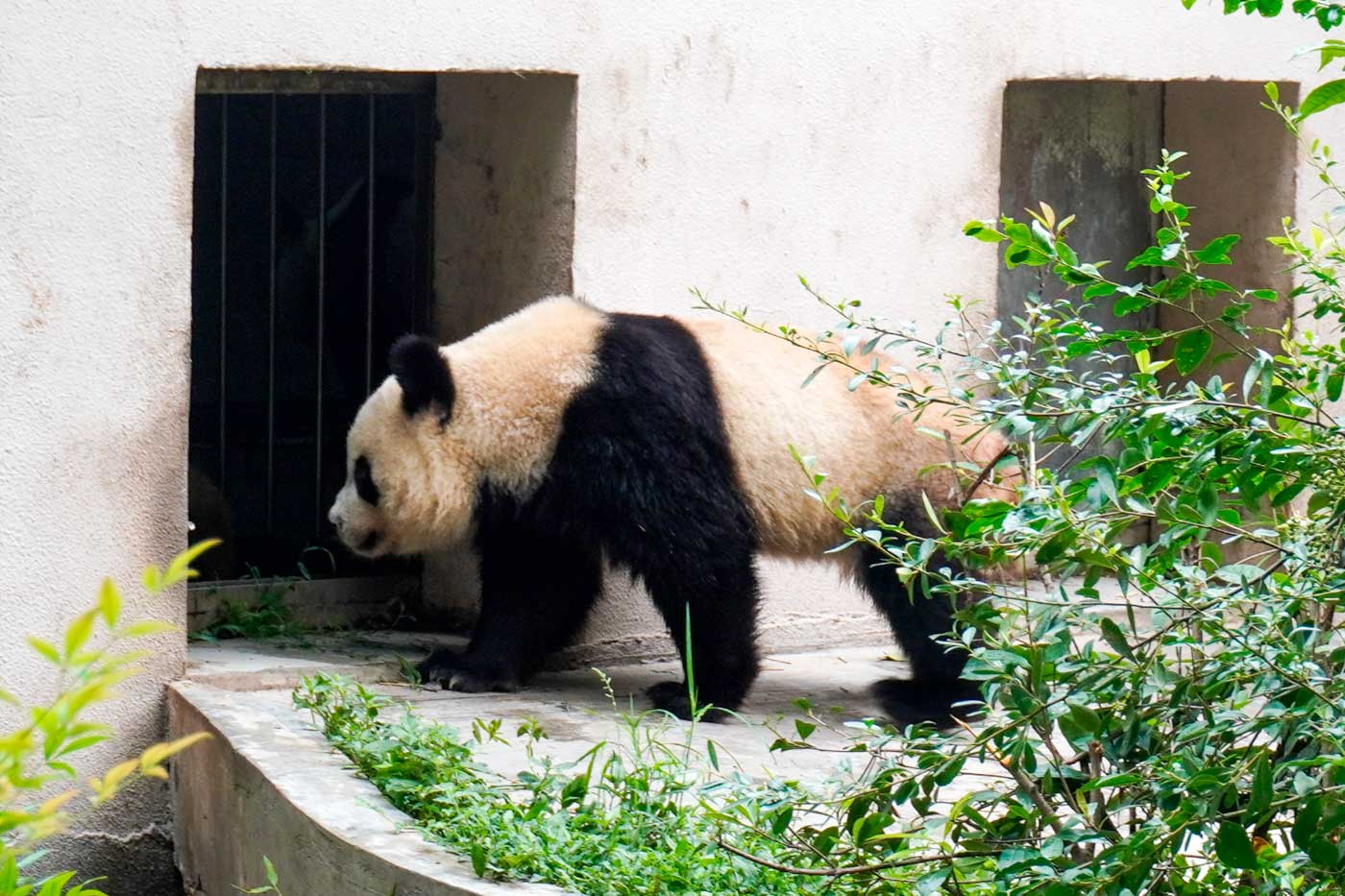
This panda base was also conceived as a true place to worship this animal, which in China is a symbol of peace and harmony with nature. Funded with public funds and always claiming to be a non-profit institution, the center was intended to be open to the public for national joy, allowing visitors to visit this animal.
The achievements are numerous. The research center is the largest captive breeding facility for giant pandas in the world, and in addition to developing methods for their expansion, they are seeking solutions to conserve the species in wild areas. In the 1990s, there were just over a dozen pandas, and today there are 240 bears.
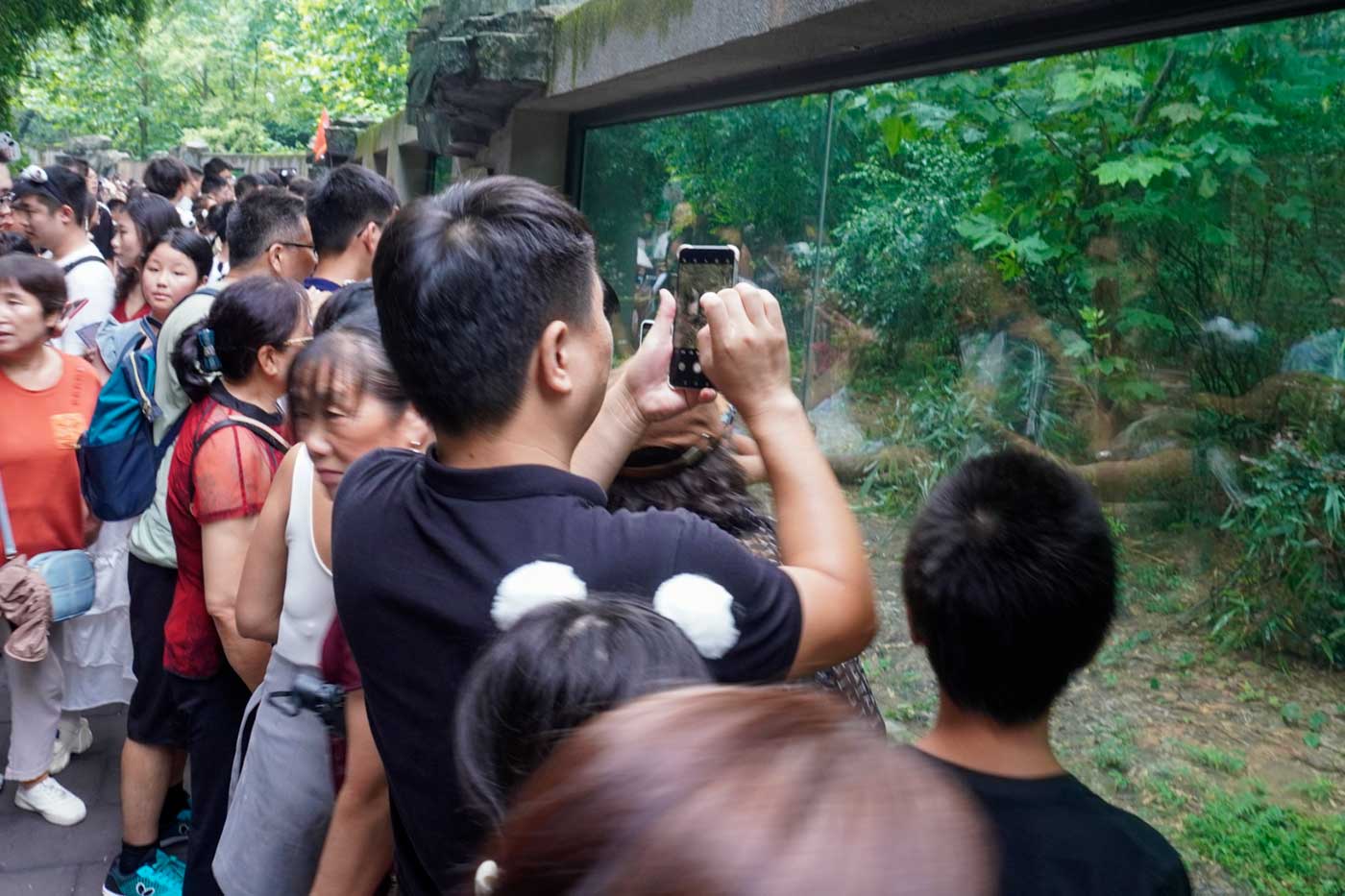
However, the Chengdu panda base itself has been criticized numerous times for seeming like a theme park, a zoo, or a crowded tourist spot. And while we can’t call the place a zoo, the truth is that there are a horrendous number of tourists.
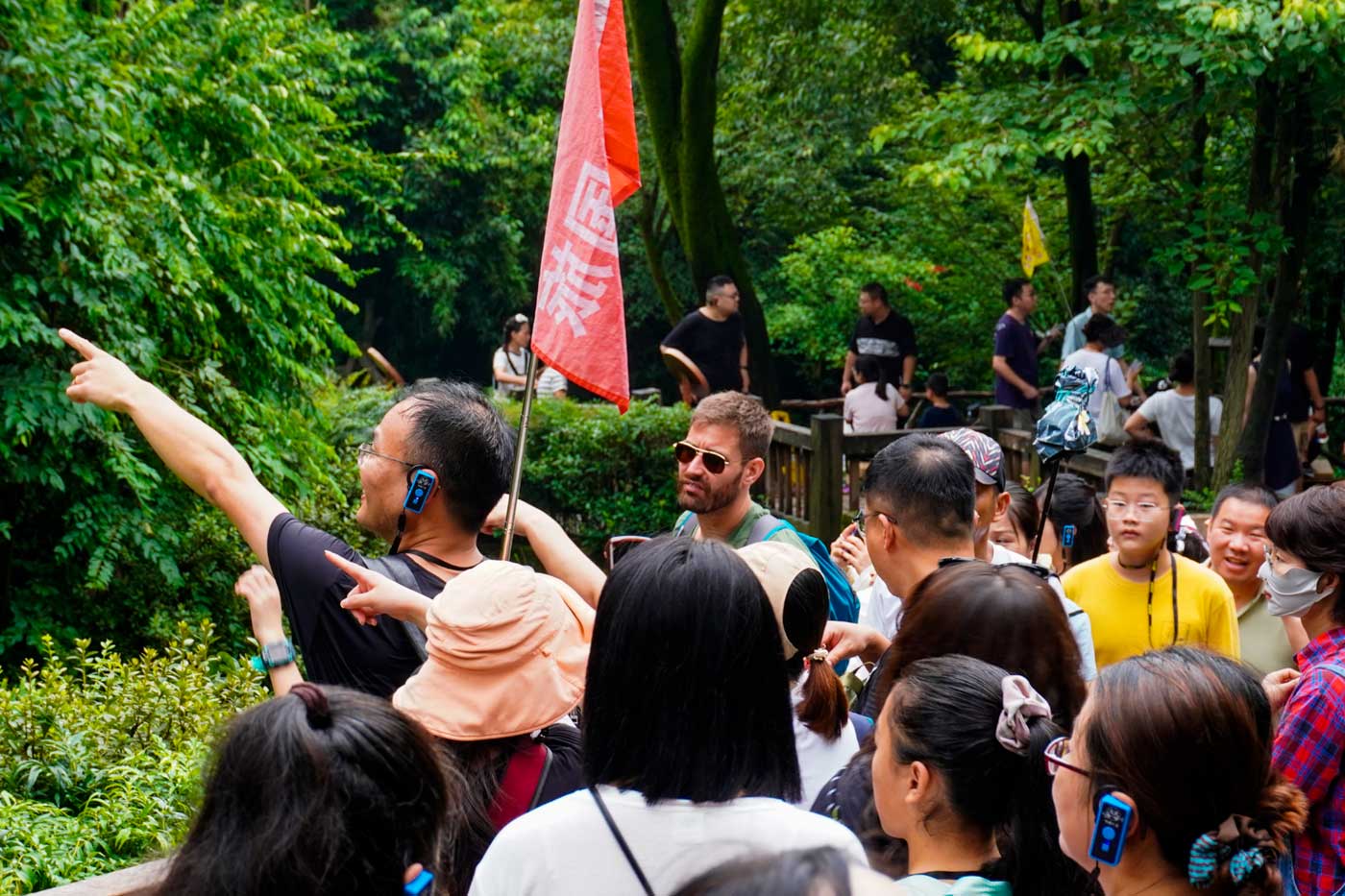
At the Chengdu research center, there is a contradiction between working hard for the pandas’ well-being and the survival of the species, while also giving free rein to tourism.
It’s like someone finding a stray cat in poor health and deciding to take it to the vet, treat it, and give it a home. And when the feline is healthy, a large crowd is invited to visit it every day to see how it’s doing.
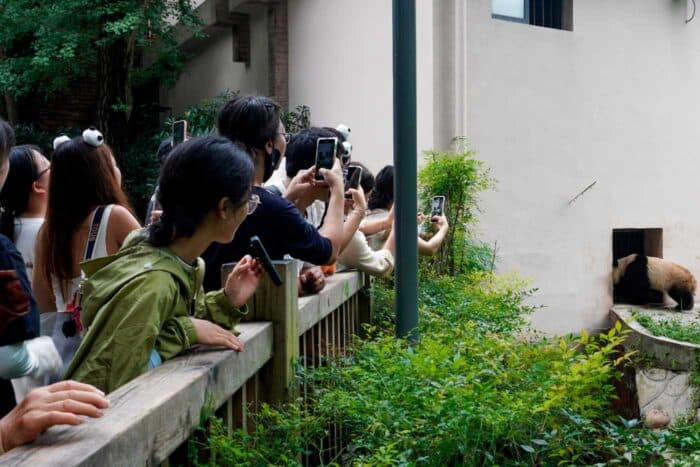
Does this mean it’s better not to visit the panda base in Chengdu ? Not at all. In reality, the impression the place gives is that, if tourism is the lesser of two evils to prevent the species from becoming extinct, the place makes sense.
And the fact is there: pandas have gone from being an endangered species to being considered vulnerable, thanks to actions like this research center.
While the research center isn’t the only place to visit the giant panda, you are almost guaranteed to encounter a few during a visit. Especially if you follow a few recommendations.
The Chengdu panda base is open year-round. But it’s hell if you decide to go on a weekend or, worse yet, on national holidays. August isn’t the best time either, as school holidays coincide with the heat, something the panda doesn’t like.
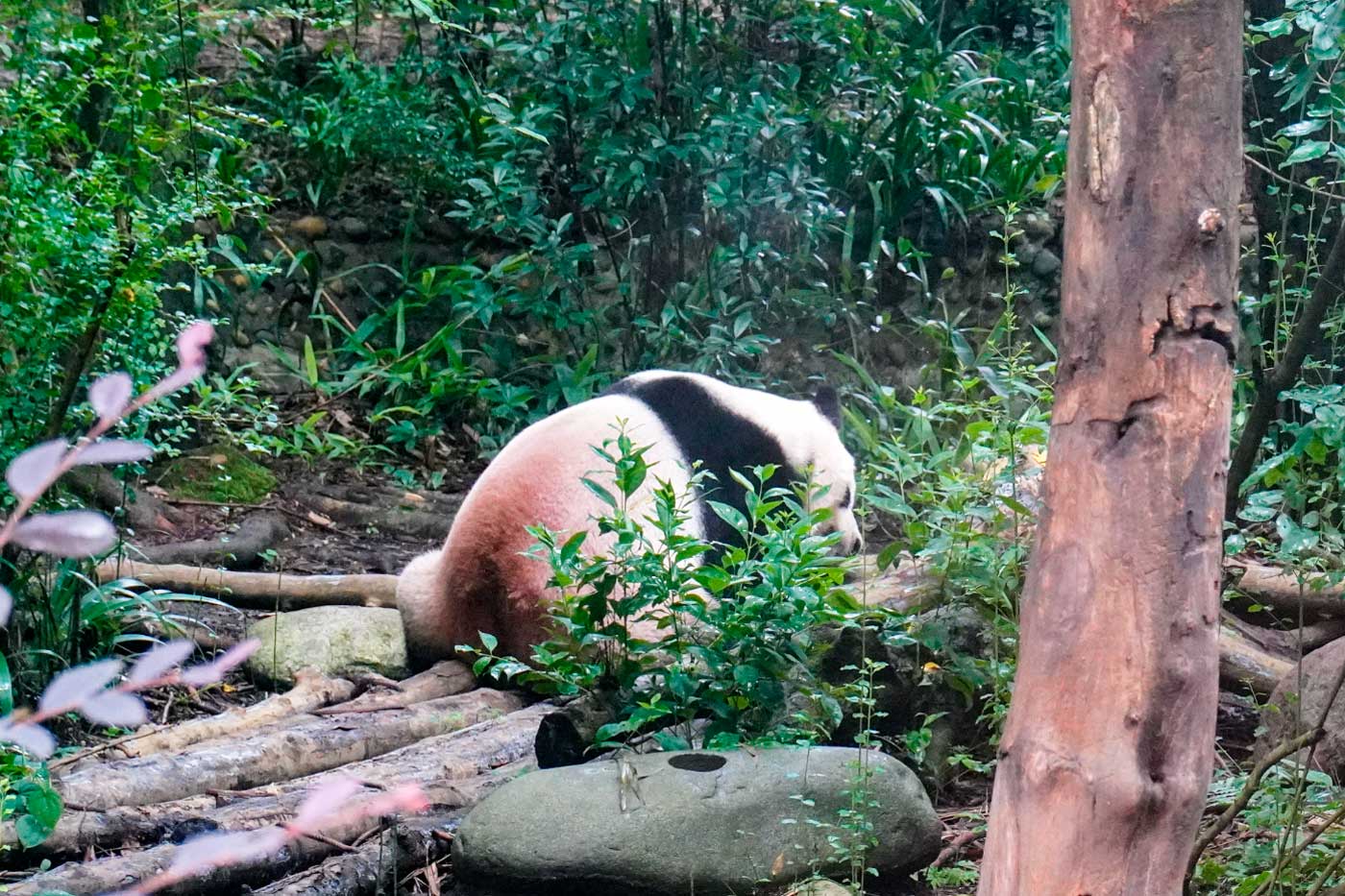
Specifically regarding the heat, there’s an important recommendation: it’s better to arrive at the park at 6:30 a.m. rather than 9 a.m., for example. Pandas are early risers and may be seeking shelter from the sun by mid-morning.
Once you’ve decided on a date, the next step is to purchase your ticket in advance. Yes, you can’t go to the panda base without one. Everything is booked online and with very little advance notice: tickets can only be purchased a maximum of one week before the day.
There are several official sites, but it’s easy to fall for unscrupulous scalpers. To avoid that, use this link to purchase the pass. The price is 55 yuan.
There are also a couple of options if you prefer a guided tour:
To get to the giant panda research center, you can easily take a taxi from downtown Chengdu for a modest fee. Or you can take the subway to Chengdu Zoo Station on Line 3. Exit B and you’ll soon see a bus that will take you to the base.
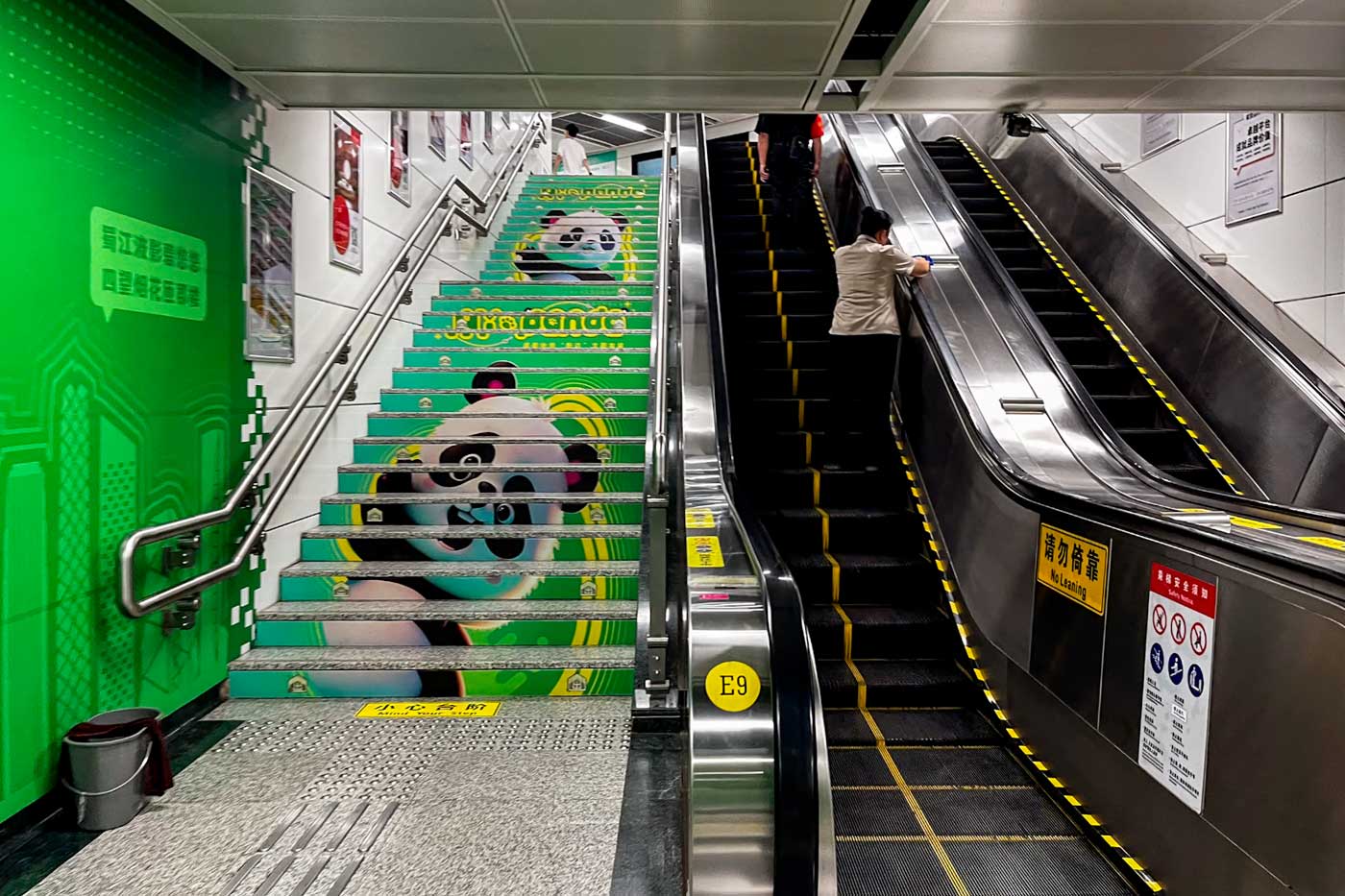
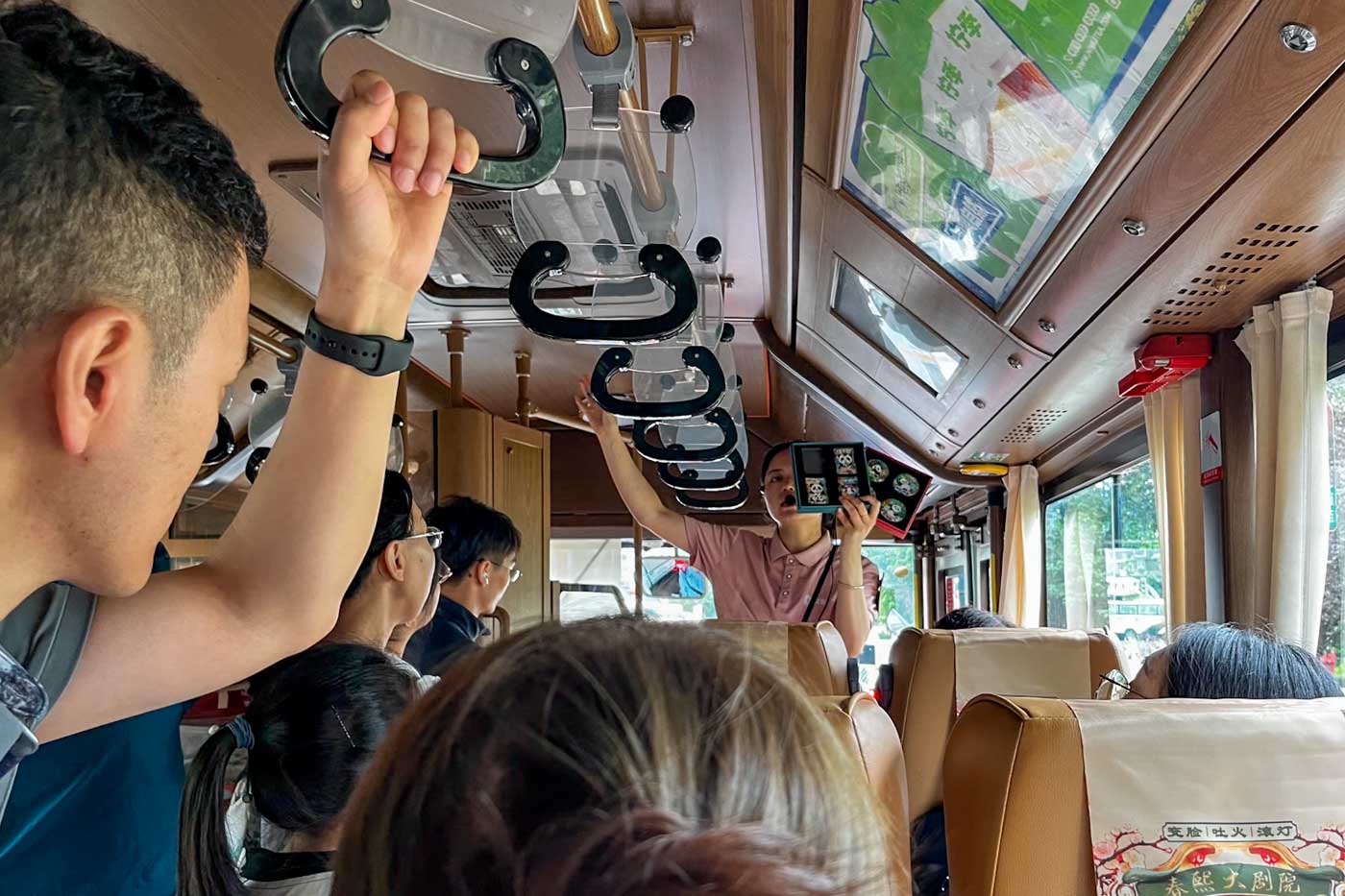
The bus costs only five yuan, and you’ll already see the effects of overcrowding. There are usually people in uniform on the bus giving instructions on how to behave and explaining what to see, all in Chinese.
Upon reaching the gates of the panda base, you’ll find a multitude of vendors selling gifts and stuffed pandas, as well as a shopping center for visitors. It’s all very touristy, designed for the curious.

Remember to bring your passport, as tourist tickets in China are linked to your ID; purchase receipts are not valid. You can enter the park directly with your ID.
It’s recommended to spend at least two hours exploring the entire Chengdu Giant Panda Research Center complex, and some people recommend up to four. As we’ve said, it’s best to arrive early, and arriving at 6:30 a.m. isn’t crazy- quite the contrary.
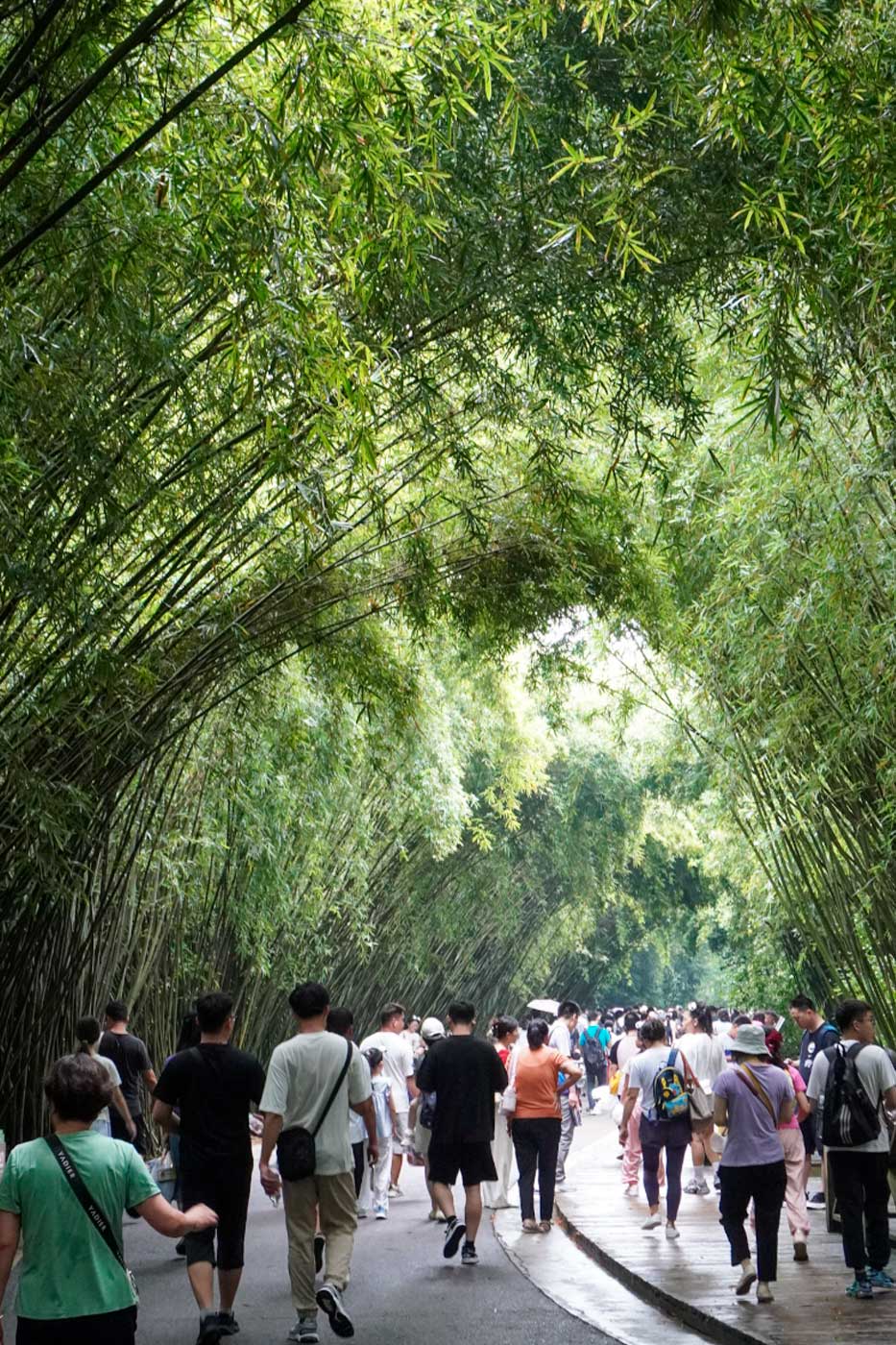
Inside, there are a few kilometers of guided tours of all the facilities where the Chengdu pandas live at the base. In addition to the nearly three hundred giant pandas, there are several red panda areas.
The feeling, as we mentioned at the beginning, is contradictory. The pandas seem happy, living their lives without too many problems, and enjoying enough space to move around. You can see them from a distance.

If you go at a busy time or during a holiday season, like August, you’ll have to endure the rush of people. That doesn’t matter; the problem is that giant pandas have to deal with it too. That’s why there are recommendations not to shout, although not everyone heeds that.
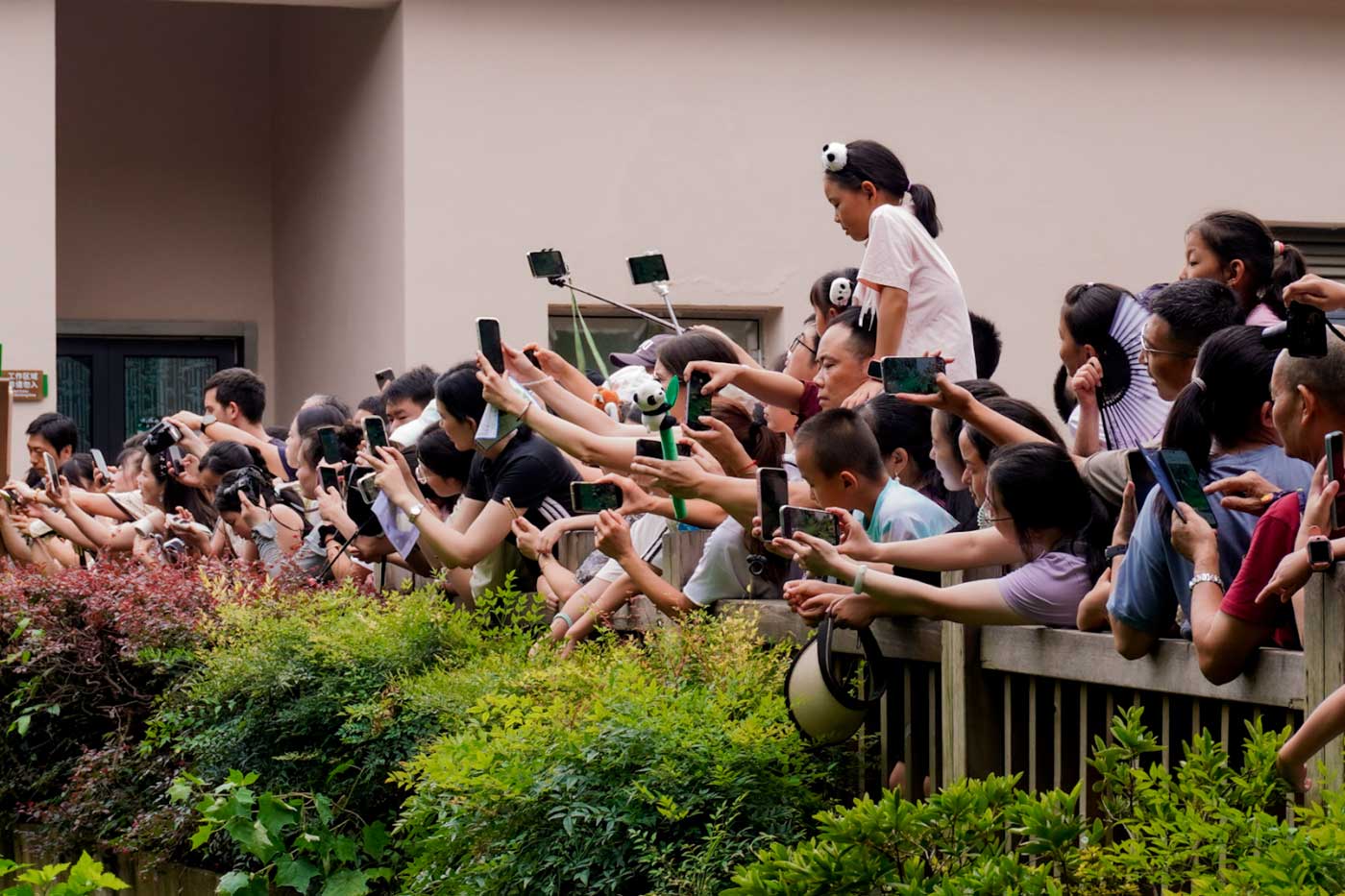
During our visit, security guards had to deal with a lot of disrespectful people climbing the railings and screaming wildly. Fortunately, most tourists were responsible and simply tried to capture everything with their cameras.
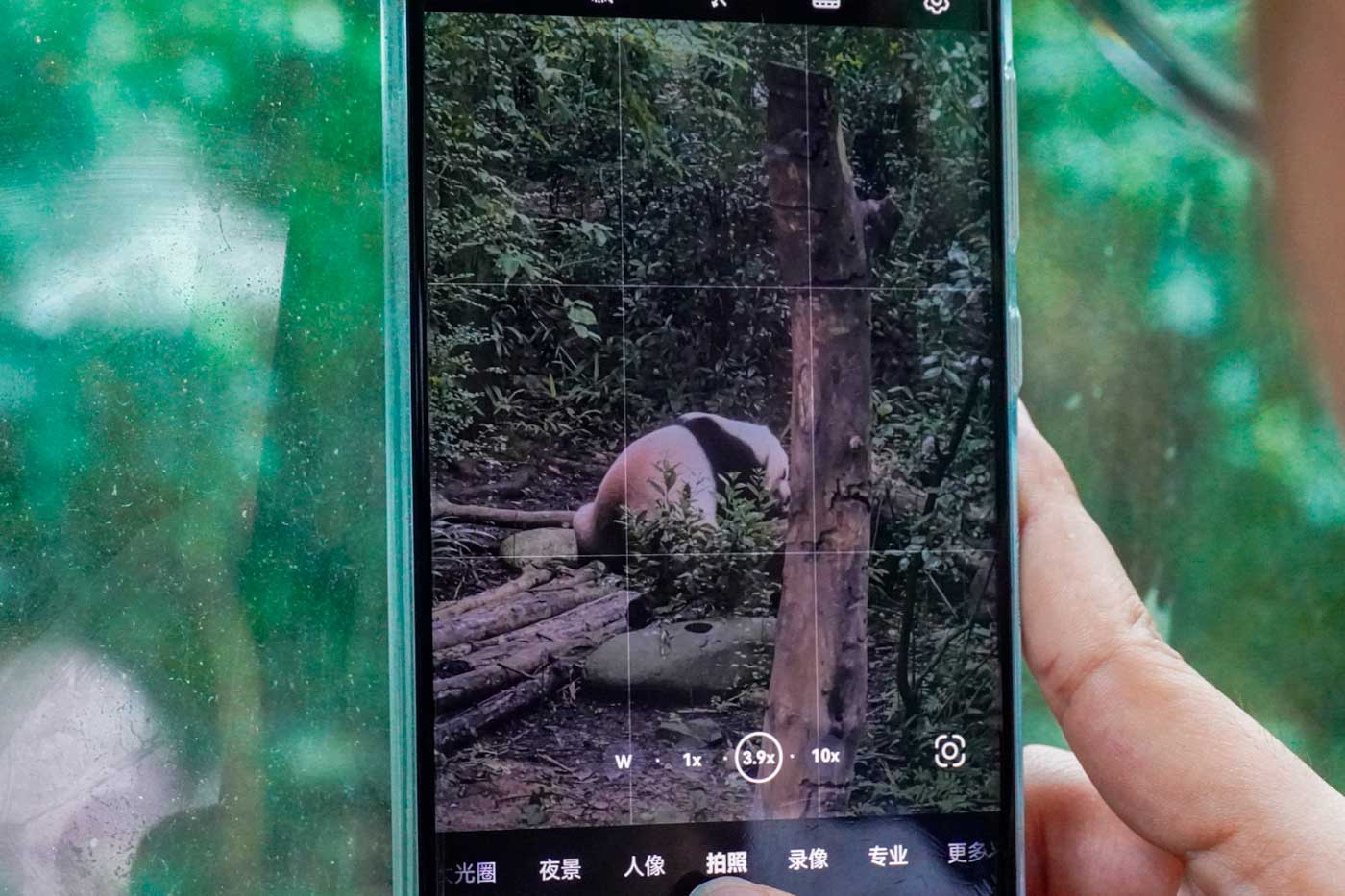
We don’t know if the large influx of people really irritates the pandas, but if so, they don’t seem too concerned about it. It’s as if the Chengdu panda base is balancing a difficult balance between mass tourism and the conservation of the species.
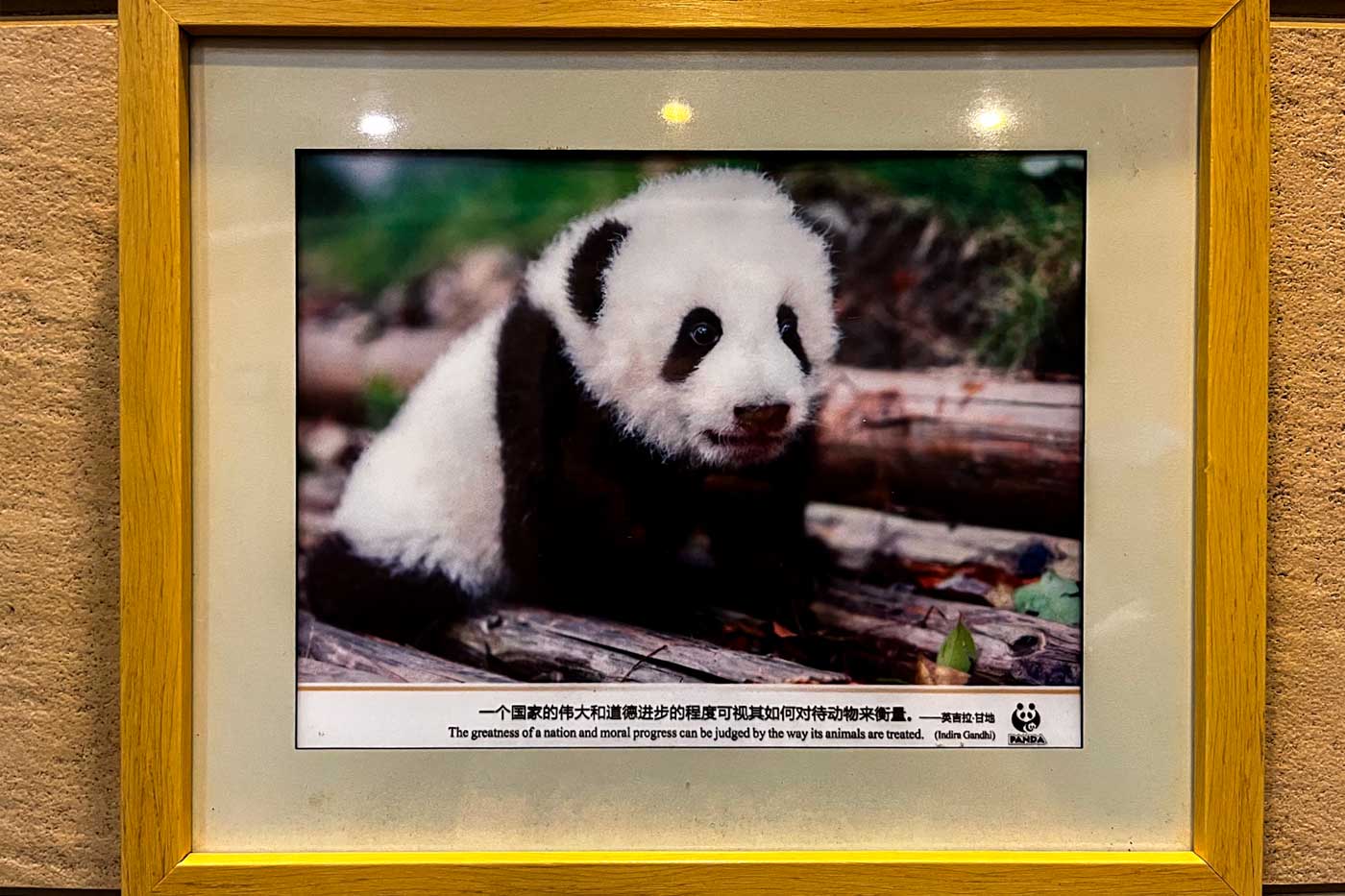
However, thinking it’s simply a tourist attraction to make money is wrong. First of all, because on a lucrative level, it would be better to raise the admission price, and for a place that costs just over six euros to cost five times as much. After all, the entrance fee is quite affordable.
That’s because China’s main intention in trying to get the research center brutally visited isn’t to make money, but rather to allow its people to see the charismatic animal. It’s also a way to build a nation and unity.
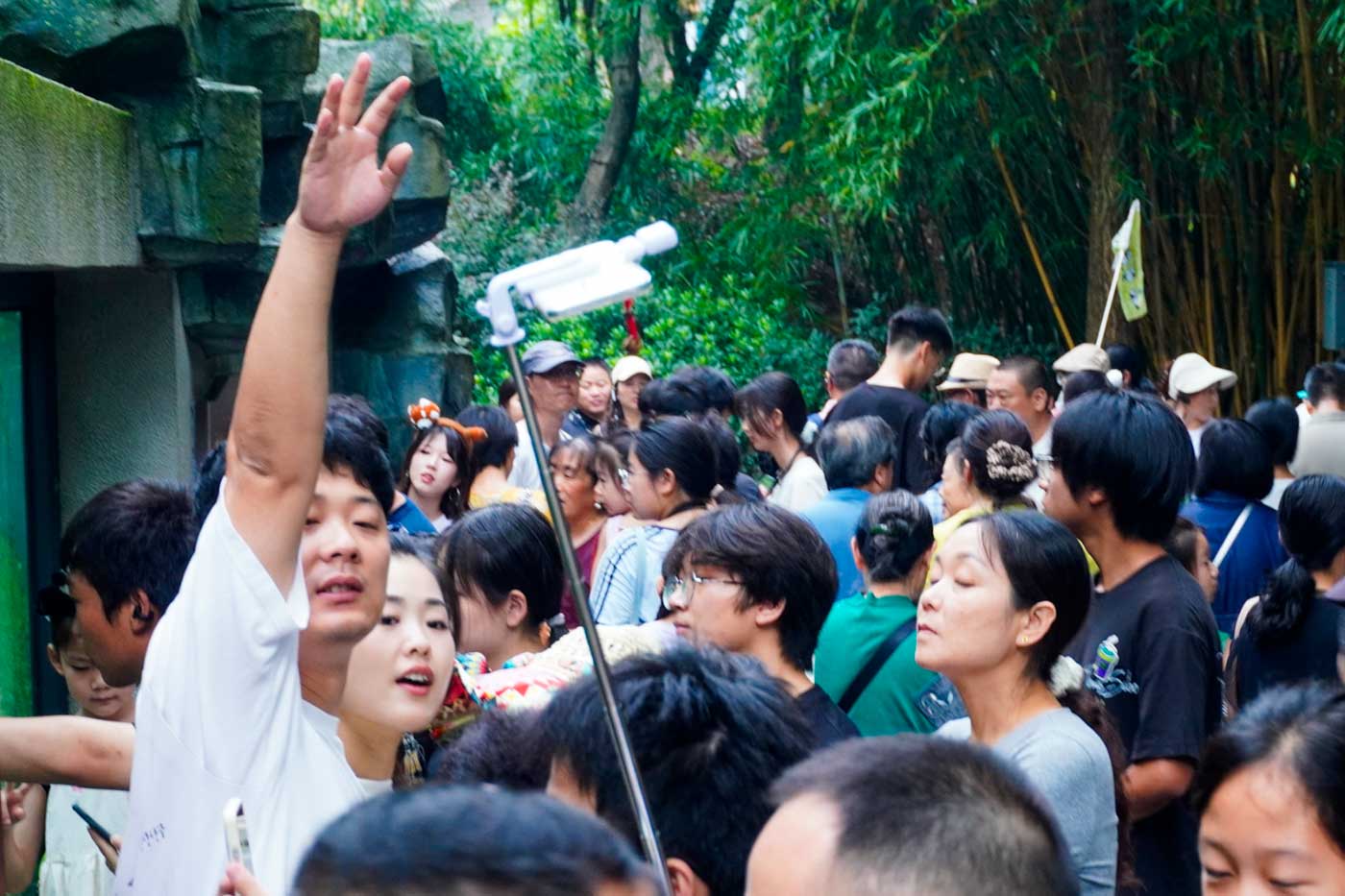
That brings us to the conclusion: should you visit the Chengdu panda base or not? Considering that there are more natural, wild alternatives, but they’re much more expensive and remote, if you want to see China’s signature animal easily, the research center is the place to go. But don’t say we didn’t warn you that it’s highly touristy.